
Fondamenti logici della filosofia, filosofia della scienza, rapporti con la teologia

_________________________


Evangelium Matt 18:1-5
In illo témpore: Accessérunt discípuli ad Iesum, dicéntes: Quis, putas, maior est in regno cœlorum? Et ádvocans Iesus parvulum, státuit eum in médio eórum et dixit: Amen, dico vobis, nisi convérsi fuéritis et efficiámini sicut párvuli, non intrabitis in regnum cœlórum. Quicúmque ergo humiliáverit se sicut párvulus iste, hic est maior in regno cœlorum. Et qui suscéperit unum párvulum talem in nómine meo, me súscipit.
Gospel Matt 18:1-5
At that time, the disciples came to Jesus, saying, Who then is greatest in the kingdom of heaven? And Jesus called a little child to Him, set him in their midst, and said, Amen I say to you, unless you turn and become like little children, you will not enter into the kingdom of heaven. Whoever, therefore, humbles himself as this little child, he is the greatest in the kingdom of heaven. And whoever receives one such little child for My sake, receives Me.
Chi dunque e’ il piu’ grande nel regno dei cieli?
E’ una domanda molto interessante che riguarda tutti noi. Solo i bambini possono entrarvi. E’ necessario accogliere i bambini! Piccoli sotto diversi aspetti. Dobbiamo riconoscere il nostro niente di fronte a Dio.
Il santo che ricordiamo oggi e’ San Giuseppe Calasanzio. Giunto a Roma si rende contro dell’abbandono dei bambini. Fondo’ l’ordine degli Scolopi (Chierici regolari poveri della Madre di Dio delle scuole pie) per l’istruzione, in particolare religiosa, dei bimbi poveri e abbandonati. Fu un’opera grandemente apprezzata e anticipatrice di iniziative simili.
Al giorno d’oggi le scuole parentali attuali hanno notevoli analogie con l’opera di San Giuseppe Calasanzio e sono quindi grandemente meritorie.
Sia lodato Gesu Cristo!
So who is the greatest in the kingdom of heaven?
It is a very interesting question that concerns us all. Only children can enter. It is necessary to welcome children! Small in many ways.
We must recognize our nothingness in front of God.
The saint we remember today is San Giuseppe Calasanzio. Once in Rome, he is against the abandonment of children.
He founded the order of the Piarists (poor regular clerics of the Mother of God of the pious schools) for the education, in particular religious, of poor and abandoned children.
It was a highly appreciated work and a forerunner of similar initiatives. Today, the current parental schools have remarkable similarities with the work of St. Joseph Calasanz and are therefore highly meritorious.
Praised be Jesus Christ!
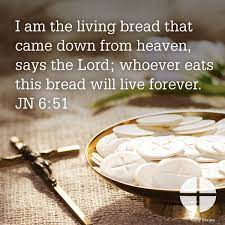
TESTO DEL VANGELO (Gv 6,52-59)
In quel tempo, disse Gesù alla folla:
In quel tempo, i Giudei si misero a discutere aspramente fra loro: «Come può costui darci la sua carne da mangiare?».
Gesù disse loro: «In verità, in verità io vi dico: se non mangiate la carne del Figlio dell’uomo e non bevete il suo sangue, non avete in voi la vita. Chi mangia la mia carne e beve il mio sangue ha la vita eterna e io lo risusciterò nell’ultimo giorno. Perché la mia carne è vero cibo e il mio sangue vera bevanda.
Chi mangia la mia carne e beve il mio sangue rimane in me e io in lui. Come il Padre, che ha la vita, ha mandato me e io vivo per il Padre, così anche colui che mangia me vivrà per me.
Questo è il pane disceso dal cielo; non è come quello che mangiarono i padri e morirono. Chi mangia questo pane vivrà in eterno».
Gesù disse queste cose, insegnando nella sinagoga a Cafàrnao.
TEXT OF THE GOSPEL (Jn 6: 52-59)
At that time, Jesus said to the crowd: At that time, the Jews began to argue bitterly among themselves: “How can this man give us his flesh to eat?” Jesus said to them: “Most assuredly, I tell you, if you do not eat the flesh of the Son of man and drink his blood, you have no life in you. Whoever eats my flesh and drinks my blood has eternal life and I will resurrect him on the last day. Because my flesh is real food and my blood is real drink. Whoever eats my flesh and drinks my blood remains in me and I in him. As the Father who has life sent me and I live for the Father, so also he who eats me will live for me. This is the bread which came down from heaven; it is not like what the fathers ate and died. Whoever eats this bread will live forever ». Jesus said these things, teaching in the synagogue in Capernaum.
La messa e’ quella votiva della santissima eucarestia.
La presenza di Gesu e’ tra noi costante, anche tramite l’eucarestia,
Per riceverla dobbiamo essere preparati: dobbiamo discernere, pensare, riflettere chi e’ Gesu e noi stessi. Siamo in peccato? Dobbiamo chiedere prima il perdono dei peccati? I nostri pensieri sono coerenti con la fede in Gesu?
Oggi e negli ultimi decenni si tende a essere superficiali. Cio’ anche a causa della nuova liturgia della messa. Oggi pero’ non possiamo piu’ accettare questo compromesso!
La messa moderna non e’ quella voluta dal Signore! E’ una messa orientata verso la terra. Non e’ piu’ il sale del cielo. Riceviamo solo il pane della terra!
Come risultato il popolo di Dio ha perso il senso del sacro. La gente ha perso il contatto con il sacro e con Dio stesso!
Ma noi siamo stati chiamati a resistere!
Dio ci chiama alla nuova epoca in cui il sole di Dio risplendera nuovamente!
Sia lodato Gesu’ Cristo!
The mass is the votive mass of the most holy Eucharist.
The presence of Jesus is constant among us, also through the Eucharist, To receive it we must be prepared: we must discern, think, reflect who Jesus is and ourselves.
Are we in sin? Should we ask for the forgiveness of sins first? Are our thoughts consistent with faith in Jesus?
Today and in recent decades we tend to be superficial. This is also due to the new liturgy of the mass. Today, however, we can no longer accept this compromise!
The modern mass is not what the Lord wanted! It is a mass oriented towards the earth. It is no longer the salt of heaven.
We only receive the bread of the earth!
As a result, God’s people have lost their sense of the sacred.
People have lost touch with the sacred and with God himself! But we have been called to resist!
God is calling us to the new age when God’s sun will shine again!
Praised be Jesus Christ!

1) Il “cespuglio rotolante nel deserto” (non rispondono, silenzio di tomba) QUI
2) Lo scettico ingiustificato (“Non sono d’accordo”, ma non spiegano per quale motivo, oppure non sono d’accordo con la dimostrazione canonica dell’invalidità della presunta rinuncia di Benedetto XVI fatta dai giuristi Acosta e Sànchez) QUI
3) Il bullo (spara insulti tipo quelli di Avvenire; ma ora pare sparito). QUI
4) Il pignolo d’assalto (contesta il refuso, la piccola imprecisione, o la questioncella laterale per delegittimare l’interlocutore)
5) Il detentore di palla di vetro (pensa di avere poteri preternaturali o soprannaturali, riuscendo a leggere nella mente di papa Ratzinger) QUI
6) Il disattento (non e’ informato sulle questioni più sottili relative al diritto canonico e ai messaggi logici che invia Papa Benedetto, come questo) QUI .
7) Lo sprezzante (che discrimina per motivi politici)
8) Il Kamikaze (tenta contestazioni argomentata, ma fallisce sul piano reazionale).
9) Lo snob (tipico comportamento dei cosiddetti vaticanisti impegnati) QUI .
10 ) Il fedelissimo (si attiene ciecamente al dogma: “il papa è uno, ed E’ CHIARO che è Francesco”). QUI
Viene pero’ da chiedersi se sia davvero proprio tutto. Facciamo un paio di esempi: 1) Mons. Carlo Maria Vigano 2) Mons. Georg. Gaenswein. Dove precisamente starebbero nella classificazione?

While the fire that would have devoured him was already burning (1,2), Jacques De Molay, Grand Master and head of the Templar order, gave 4 prophecies. Of these, the first 3 were completed flawlessly, the last one would have had to wait 700 years .. before il was done. We note, however, that counting the 700 years up to the beginning of the 700th year we get as predicted date March 13, 2013, a month and two days after the date of publication of Benedict XVI’s “Declaratio” [Proof: in fact, March 13, 1315 corresponds to the beginning of the second year, March 13, 1315 to the beginning of the third, …, and finally March 13, 2013 to the beginning of the 700th].
Philip IV the Fair, in the desire to destroy the Order of the Templars, burned the Grand Master of the Order Jacques de Molay and the 37 knights of the Order accused of heresy at the stake. When the Grand Master saw the stake, he asked his executioners to face the cathedral: “Please let me join hands for one last prayer. I’ll die soon and God knows it’s unfair. But I tell you that misfortune will fall on those who unjustly condemn us. ”
– Addressing Pope Clement V, he told him:“ You will die within 40 days ”. In fact, Clement V died 33 days later.
– Turning to King Philip IV of France, known as “the Beautiful”, he said: “You will die by the end of 1314”. Philip the Fair died on November 29, 1314.
– Addressing the French Monarchy, he said: “The French Royal House will definitely fall within the 13th generation of Philip IV”. Louis XVI was effectively the 13th descendant of Philip IV and the last King of France.
– Addressing the Roman Church he said: “The Papacy will end within 700 years of my death”.
The death by the year 1314 of both characters (Pope Clement V and King Philip IV) only reinforced the common idea that he had fallen victim to an injustice (3).
As for the third prophecy, the execution of Louis XVI during the French Revolution (which effectively ended the absolute monarchy in France) was seen as the culmination of the “revenge of the Templars”. So much so that the executioner Charles-Henri Sanson, before lowering the guillotine on the sovereign’s head, would have murmured to him: “I am a Templar, and I am here to carry out Jacques de Molay’s revenge.” (4)
Finally for the fourth prophecy, will this also come true? Seven hundred years expired in 2014, but following the above calculation, the correct year would follow, 2013, but not the day that should actually be February 11, 2013 (when Pope Benedict XVI actually announced his alleged resignation with the famous “Declaratio”).
However, it is also necessary to take into account the date change implemented by Pope Gregory XIII in 1582 which implies the cancellation (abbreviation) of 10 days from the calendar. It is concluded that the date foreseen by the prophecy (March 13, 2013) should actually correspond to the date of March 23 in the Gregorian calendar.
It follows, therefore, that 11 February 2013 is still correctly included in the period predicted for by the prophecy.
___________________________
_____________________________________

Evangelium Luc 19:12-26
In illo témpore: Dixit Iesus discípulis suis parábolam hanc: Homo quidam nóbilis ábiit in regionem longínquam accípere sibi regnum, et revérti. Vocátis autem decem servis suis, dedit eis decem mnas, et ait ad illos: Negotiámini, dum vénio. Cives autem eius óderant eum: et misérunt legatiónem post illum, dicéntes: Nólumus hunc regnáre super nos. Et factum est, ut redíret accépto regno: et iussit vocári servos, quibus dedit pecúniam, ut sciret, quantum quisque negotiátus esset. Venit autem primus, dicens: Dómine, mna tua decem mnas acquisívit. Et ait illi: Euge, bone serve, quia in módico fuísti fidélis, eris potestátem habens super decem civitátes. Et alter venit, dicens: Dómine, mna tua fecit quinque mnas. Et huic ait: Et tu esto super quinque civitátes. Et alter venit, dicens: Dómine, ecce mna tua, quam hábui repósitam in sudário: tímui enim te, quia homo austérus es: tollis, quod non posuísti, et metis, quod non seminásti. Dicit ei: De ore tuo te iúdico, serve nequam. Sciébas, quod ego homo austérus sum, tollens, quod non pósui, et metens, quod non seminávi: et quare non dedísti pecúniam meam ad mensam, ut ego véniens cum usúris útique exegíssem illam? Et astántibus dixit: Auferte ab illo mnam et date illi, qui decem mnas habet. Et dixérunt ei: Dómine, habet decem mnas. Dico autem vobis: Quia omni habénti dábitur, et abundábit: ab eo autem, qui non habet, et, quod habet, auferétur ab eo.
Gospel Luke 19:12-26
At that time, Jesus spoke this parable to His disciples: A certain nobleman went into a far country to obtain for himself a kingdom and then return. And having summoned ten of his servants, he gave them ten gold pieces and said to them, ‘Trade till I come.’ But his citizens hated him; and they sent a delegation after him to say, ‘We do not wish this man to be king over us.’ And it came to pass when he had returned, after receiving the kingdom, that he ordered the servants to whom he had given the money to be called to him in order that he might learn how much each one had made by trading. And the first came, saying, ‘Lord, your gold piece has earned ten gold pieces.’ And he said to him, ‘Well done, good servant; because you have been faithful in a very little, you shall have authority over ten towns.’ Then the second came, saying, ‘Lord, your gold piece has made five gold pieces.’ And he said to him, ‘Be you also over five towns.’ And another came, saying, ‘Lord, behold your gold piece, which I have kept laid up in a napkin; for I feared you, because you are a stern man. You take up what you did not sow.’ He said to him, ‘Out of your own mouth I judge you, you wicked servant. You knew that I am a stern man, taking up what I did not lay down and reaping what I did not sow. Why, then, did you not put my money in a bank, so that I on my return might have gotten it with interest?’ And he said to the bystanders, ‘Take away the gold piece from him, and give it to him who has the ten gold pieces.’ But they said to him, ‘Lord, he has ten gold pieces.’ I say to you that to everyone who has shall be given; but from him who does not have, even that which he has shall be taken away.